

Talk Abstract and Speaker Bio for RRJS 2026 Edition
Prof. Christian Cipriani
Sant'Anna Scuola universitaria Superiore Pisa, Italy

TITLE: TBA
ABSTRACT:
TBA
BIO:
Prof. Christian Cipriani is the Dean of the Faculty of experimental sciences of the Scuola Superiore Sant'Anna and Head of the Artificial Hands Area at the BioRobotics Institute. His field of research is (bio)mechatronics applied to the area of upper limb prosthetics.
From 2017 to 2023 he served as the Director of the BioRobotics Institute. From 2014 to 2016 he was an Associate Professor of Bioengineering at the BioRobotics Institute of SSSA also serving as Deputy Director (2014-2017). In 2012 he has been a Visiting Scientist with the Biomechatronics Development Lab at University of Colorado Denver | Anschutz Medical Campus, with a Fulbright Scholarship. He received the Ph.D. in Biorobotics Science and Engineering from a joint program between IMT Institute for Advanced Studies, Lucca and Scuola Superiore Sant'Anna in 2008, and the Laurea degree in Electronic Engineering (MSc) with full marks from the University of Pisa, Italy in 2004.
He has coordinated several national and international research projects and authored 180+ peer reviewed scientific papers, 100+ of which on international journals. His current research is sponsored by the Italian Workers’ Compensation Authority (INAIL), the Italian Ministry of University and Research (MUR), and the European Research Council (ERC). He is the founder of Prensilia S.r.l., a spin-off company of SSSA that develops and commercializes prosthetic and robotic hands.
Prof. Marco Controzzi
Sant'Anna Scuola universitaria Superiore Pisa, Italy
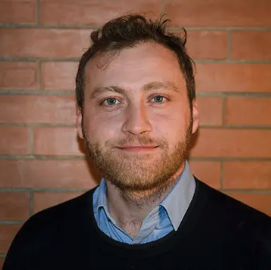
TITLE: Human-centred shared autonomy in assistive robotics: Ongoing work on understanding users, supporting actions, and preserving agency
ABSTRACT: Assistive robotics increasingly relies on shared autonomy to reduce user effort while preserving meaningful human control. This talk brings together a set of ongoing studies investigating how such systems can better understand users, support their actions, and remain intelligible during interaction. Taken together, these studies outline our laboratory’s research trajectory towards more effective and human-centred shared autonomy. We first examine gaze during robot-mediated manipulation, showing that, compared with natural manipulation, its predictive role is preserved but reorganised towards increased monitoring. We then explore how gaze and intracortical motor signals can provide complementary information for multimodal intention decoding. Moving from intention to assistance, we present AIKIDO, a controller designed for anticipatory, constraint-aware motion generation. Finally, we investigate how changes in shared control are experienced by users, focusing on sense of agency, learning, and haptic communication.
BIO: Marco Controzzi, PhD, MScME, is Associate Professor of Bioengineering at The BioRobotics Institute, Scuola Superiore Sant’Anna, and Founder and CSO of Prensilia SRL. His research focuses on dexterous artificial hands and human-robot interaction. He has contributed to the development of advanced prosthetic and robotic hands, bidirectional human-machine interfaces, and methods for assessing hand function.
Prof. Giuseppe Notarstefano
Università di Bologna, Italy
TITLE: Learning-driven Optimization and Safe Control of Autonomous and Distributed Robots
ABSTRACT: In this talk I will present a learning-driven optimization and control framework for the safe operation of autonomous robots in real time and under uncertain operating conditions while learning about the environment. In the first part of the talk, I will introduce novel hierarchical and learning-driven numerical optimal control methods to safely drive autonomous robots within constrained operating regions. At the methodological level, I will show how systems theory provides elegant and insightful tools to analyze complex systems involving the interconnection between algorithmic and physical dynamics. In the second part of the talk, I will move to a distributed framework in which the solution to an optimization problem is computed cooperatively by multiple agents without a central coordinator. For this setting, I will present multi-resolution distributed learning and optimization algorithms that combine microscopic agent-level schemes with macroscopic models. Finally, I will introduce novel ROS 2-based toolboxes for distributed robotics and show virtual and mixed-reality experiments involving heterogeneous multi-robot systems.
BIO: Giuseppe Notarstefano is a Professor in the Department of Electrical, Electronic, and Information Engineering G. Marconi at Alma Mater Studiorum Università di Bologna, where he has alsos been Director of Degree of Automation Engineering from 2019 to 2025. He was Associate Professor (June ‘16 – June ‘18) and previously Assistant Professor, Ricercatore, (from Feb ‘07) at the Università del Salento, Lecce, Italy. He received the Laurea degree “summa cum laude” in Electronics Engineering from the Università di Pisa in 2003 and the Ph.D. degree in Automation and Operation Research from the Università di Padova in 2007. He has been visiting scholar at the University of Stuttgart, University of California Santa Barbara and University of Colorado Boulder. His research interests include distributed optimization and learning, cooperative and distributed robotics, nonlinear optimal control and learning, and trajectory optimization and maneuvering of autonomous vehicles. He has served as an Associate Editor for IEEE Transactions on Automatic Control, IEEE Transactions on Control Systems Technology and IEEE Control Systems Letters. He has been part of the Conference Editorial Board of IEEE Control Systems Society and EUCA. He was recipient of the IEEE TCNS outstanding paper award 2021 and his students have received awards for best student papers and theses including the EECI European PhD award on Systems and Control. He was a recipient of an ERC Starting Grant 2014.
Dr. Edoardo Lamon
Università di Trento

TITLE: Towards Remote Physical Examination with Collaborative Robotics
ABSTRACT:
Remote physical examination is an emerging frontier in medical telerobotics, with the potential to extend selected diagnostic procedures beyond conventional telehealth. In this talk, I will present our recent work on roboticultrasonography and palpation, where remote operators are supported through haptic feedback, virtual reality interfaces, and shared-control approaches. A central focus of this research is the modelling of patient anatomy and the estimation of tissue viscoelastic properties, which support safe, compliant, and repeatable physical interaction, as well as consistent force regulation during scanning and palpation. Building on these foundations, I will discuss examples including assisted tele-ultrasonography, robotic exploration for lump detection, and ongoing developments towards ultrasound-guided intervention. Taken together, these studies highlight how collaborative robotics can support more effective, ergonomic, and reliable approaches to remote physical examination.
BIO:
Edoardo Lamon is an Assistant Professor in the Department of Information Engineering and Computer Science (DISI) at the Università di Trento. From 2021 to 2023, he was a Postdoctoral Researcher in the Human-Robot Interfaces and Interaction (HRI²) group at the Istituto Italiano di Tecnologia (IIT) in Genoa, Italy, where he also carried out his PhD research. He received his PhD from the University of Pisa in 2021; his dissertation was selected as a finalist for the Georges Giralt PhD Award, recognizing the best European thesis in robotics.
At the University of Trento, he is a member of the Interdepartmental Robotics Lab (IDRA), where he leads research activities in assistive and medical robotics. His research interests include physical human-robot interaction, medical robotics, human-robot collaboration, and the application of artificial intelligence, robot control and learning in industrial and medical scenarios.
He has contributed to several successful EU-funded projects, including HARMONICA, SOPHIA, and CONCERT, as well as national project proposals such as the Fondazione VRT-funded SIRING-IA project. He is the author of more than 30 publications in scientific journals and international conferences. He serves as Associate Editor for IEEE Transactions on Medical Robotics and Bionics (since 2026) and IEEE Robotics and Automation Letters, and as Associate Editor for the IEEE International Conference on Ubiquitous Robots (both since 2023).
His work has received several distinctions, including finalist recognition for the Georges Giralt PhD Award for the best European PhD thesis in robotics, the Best Paper Award on Surgical Robotics at I-RIM 3D 2025, finalist recognition for the Best Paper Award on Mobile Manipulation at IROS 2022, for Best Paper Awards at I-RIM in 2024, 2021, and 2019, and for the MECSPE Solution Award in 2020.
Prof. Andrea Garulli
Università di Siena, Italy
TITLE: Reinforcement Learning Approaches to Human-Aware Robot Navigation
ABSTRACT:
The integration of autonomous mobile robots into human-populated environments is a classical challenge in modern robotics. While model-based planning algorithms have been the standard for a long time, they often struggle to capture the complex, interactive nature of crowd dynamics. Consequently, RL has emerged as a promising paradigm, allowing robots to learn sophisticated navigation policies directly from the interaction with the environment. In this talk, we will review some recent research activity on RL-based human-aware robot navigation at the University of Siena. In particular, we introduce JESSI (JAX-based E2E Safe Social Interpretable navigation), a lightweight end-to-end RL framework that maps raw LiDAR scans directly to kinematically feasible control commands. JESSI enhances safety via Dirichlet-parameterized continuous action spaces and deterministic bounding, while an integrated attention-based perception module extracts probabilistic human states for interpretable, socially aware decision-making. The role of pedestrian dynamics simulations in RL-based navigation will also be discussed. To this aim, we present LegNav, an extension of the headed social force model, with explicit leg dynamics and realistic 2D LiDAR rendering, providing a simulation framework that allows to train very efficiently a deployable policy on a single consumer GPU.
BIO:
Andrea Garulli was born in Bologna, Italy, in 1968. He received the Laurea in Electronic Engineering from the University of Firenze in 1993, and the Ph.D. in System Engineering from the University of Bologna in 1997. In 1996 he joined the University of Siena, where he is currently Professor of Control Systems. He has held positions of dean of the Faculty of Engineering (2011-2012) and director of the Department of Information Engineering and Mathematics (2015-2021).
He is a Fellow of the IEEE and he has been member of the Conference Editorial Board of the IEEE Control Systems Society and Associate Editor for the IEEE Transactions on Automatic Control and Automatica. He is author of more than 200 technical publications and co-author of the book "Homogeneous Polynomial Forms for Robustness Analysis of Uncertain Systems" (Springer, 2009). His main research interests include system identification, robust estimation and control, autonomous systems, mobile robotics and aerospace applications.
Prof. Jens Kober
University of Stuttgart, Germany
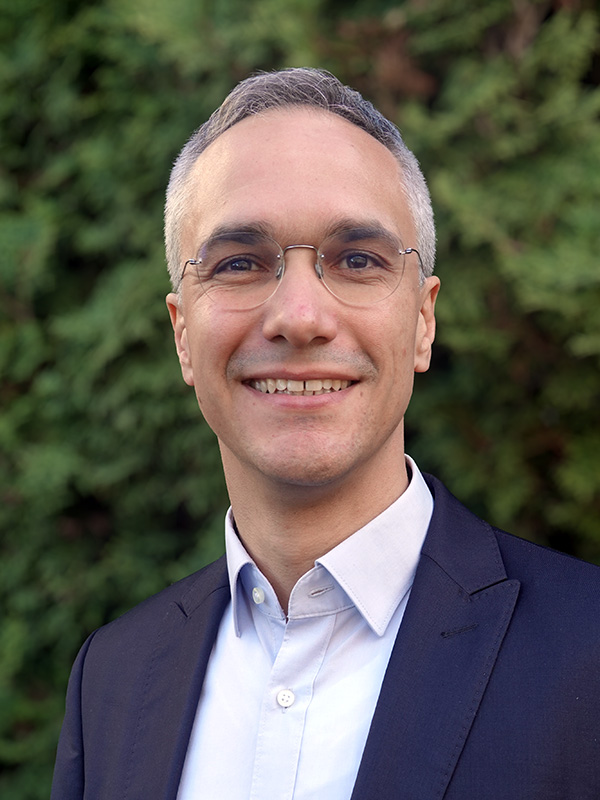
TITLE: Robots Learning Through Interactions
ABSTRACT: The acquisition and self-improvement of novel motor skills is among the most important problems in robotics. Complexity arises from interactions with their environment and humans, dealing with high-dimensional input data, non-linear dynamics in general and contacts in particular, multiple reference frames, and variability in objects, environments, tasks, and human behavior. A human teacher is always involved in the learning process, either directly (providing data) or indirectly (designing the optimization criterion), which raises the question: How to best make use of the interactions with the human teacher to render the learning process efficient and effective? In this talk I’ll argue that there are tremendous benefits in having a human teacher intermittently interact with a robot also while it is learning. I will discuss various methods we have developed in the fields of supervised learning, imitation learning, reinforcement learning, and interactive learning. All these concepts will be illustrated with benchmark tasks and real robot experiments ranging from fun (ball-in-a-cup) to more applied (retail environments).
BIO: Jens Kober is a full professor at the University of Stuttgart, Germany, and a Research Team Lead at Fraunhofer IPA. He previously worked as an associate professor at the TU Delft, Netherlands, and as a postdoctoral scholar jointly at the CoR-Lab, Bielefeld University, Germany and the Honda Research Institute Europe, Germany. He graduated in 2012 with a PhD Degree in Engineering from TU Darmstadt and the MPI for Intelligent Systems. For his research he received the annually awarded Georges Giralt PhD Award for the best PhD thesis in robotics in Europe, the 2018 IEEE RAS Early Academic Career Award, the 2022 RSS Early Career Award, and has received an ERC Starting grant. His research interests include motor skill learning, (deep) reinforcement learning, imitation learning, interactive learning, and machine learning for control.
Prof. Masoumeh Mansouri
University of Birmingham, United Kingdom

TITLE: Robust Decision Making in Multi-Agent Systems
ABSTRACT:
This talk explores several principles of robust decision making in multi-agent systems, focusing on how autonomous agents can operate reliably in complex, uncertain, and dynamic environments. In particular, I will cover aspects such as problem decomposition, verification, failure handling, and responsible modelling in the context of real-world robotic applications, including mining, object transportation, automated assembly, museum robots, and construction sites.
BIO:
Masoumeh Iran Mansouri is an Associate Professor in the School of Computer Science at the University of Birmingham, UK. Previously, she was a researcher at the Centre for Applied Autonomous Sensor Systems at Örebro University. She has also been a visiting researcher at the Oxford Robotics Institute and Sven Koenig’s lab at the University of Southern California. Her research primarily focuses on AI planning methods for robotics, particularly on integrating robot task and motion planning to enable robots to make autonomous or semi-autonomous decisions in unstructured environments shared with humans. Her research also extends to critical cultural robotics which investigates the intersection of cultural theories and robotics from a critical perspective. She is the co-founder of the Critical Cultural Robotics Network at the University of Birmingham, and recently, co-founded the Critical Cultural Robotics Network to explore forms of contestation against AI systems.